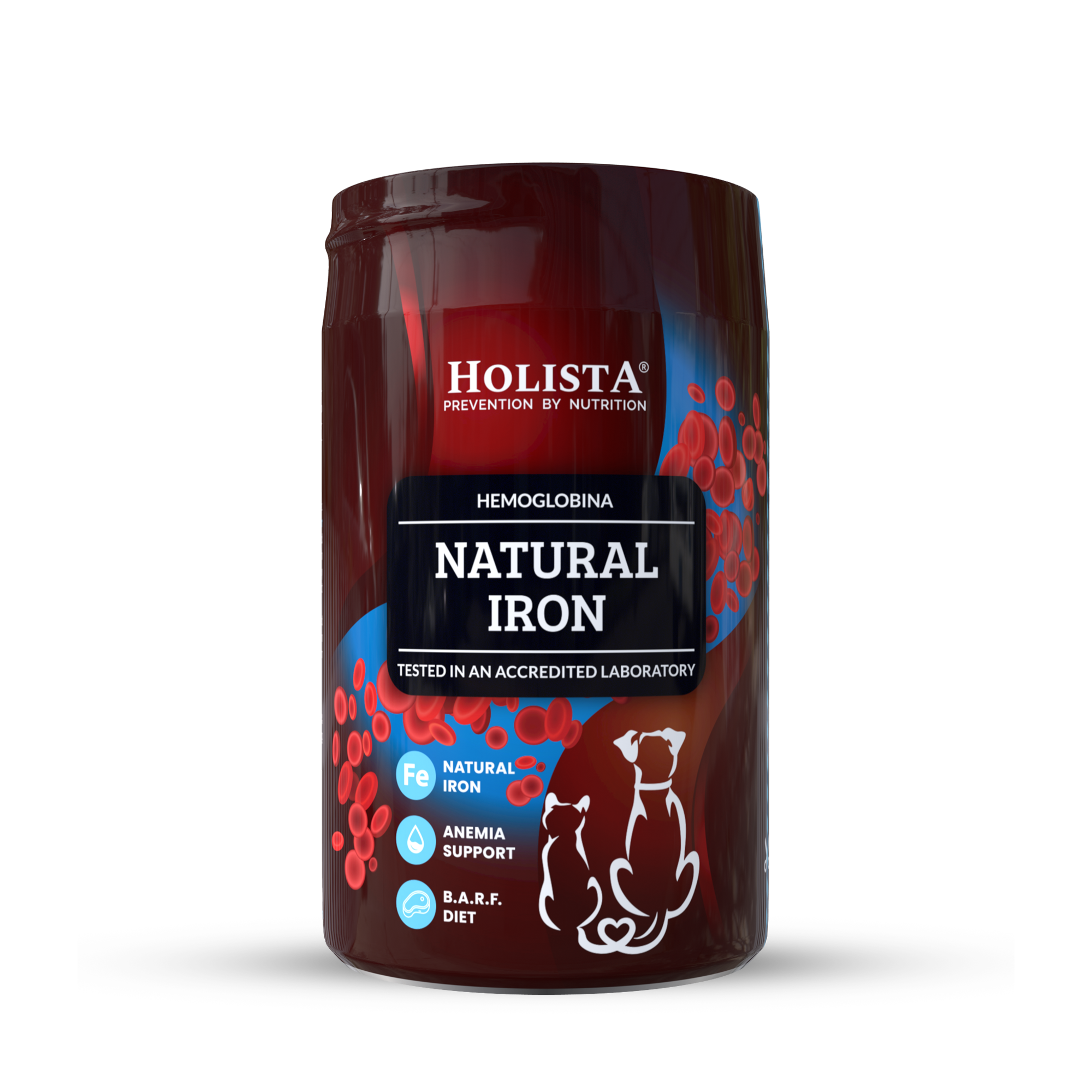
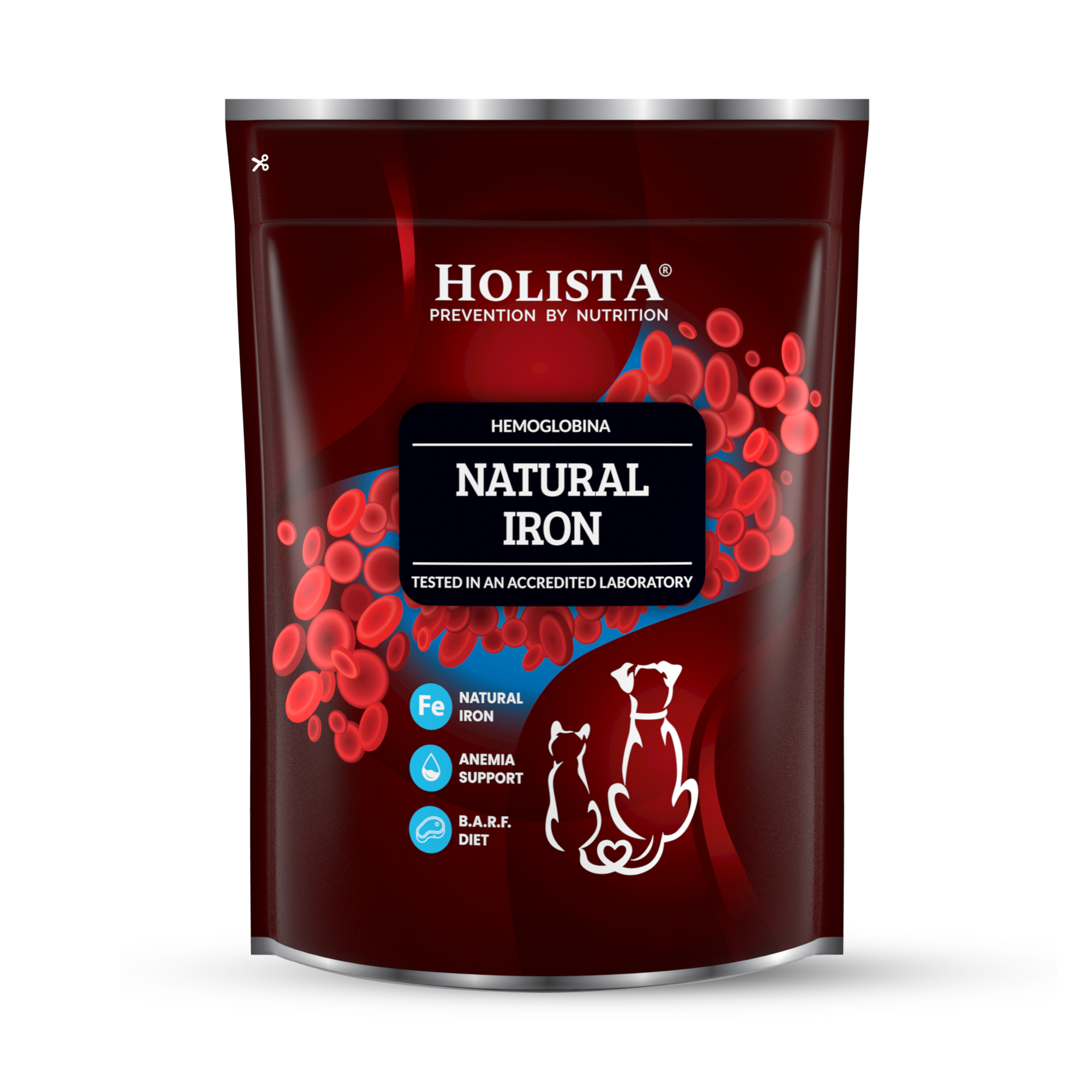
Description
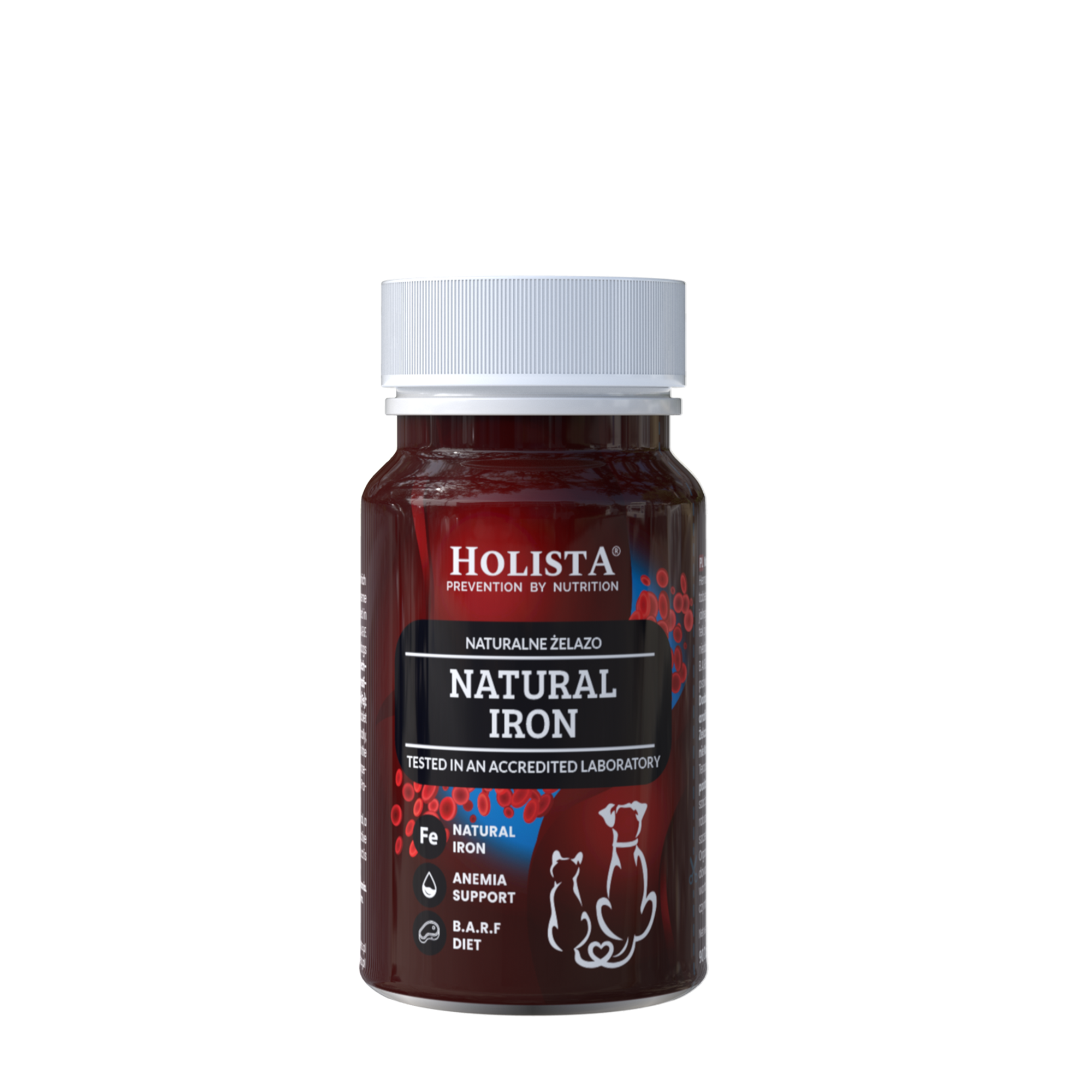
Hemoglobin is a rich source of highly bioavailable heme iron, supporting the body in the production of red blood cells.
Heme iron is the most absorbable form of iron for carnivorous animals such as dogs, cats, and ferrets. These animals have a limited or no ability to utilize non-heme iron from plant sources. Improper iron intake can lead to a wide range of health disorders and dysfunctions in the hematopoietic system and internal organs.
Iron deficiency results in anemia and insufficient oxygenation of the body. Due to the lack of oxygen, cells slow their metabolism and die, while tissues lose their ability to regenerate. The organism begins to suffocate, and the animal becomes weak and lethargic.
Excessive iron intake, on the other hand, may lead to hemosiderosis — blood thickening. The high oxidative potential of excessive dietary iron is toxic to the liver, causing inflammation and degeneration of this organ, and increasing the risk of liver cancer.
Hemoglobin doses should be carefully adjusted to the animal’s diet and individual needs.
Composition
Ingredients: 100% pork hemoglobin (dried erythrocyte fraction)
Analytical composition per 100g:
Protein 92%, Moisture 5%, Iron (Fe) 266 mg/100g
Dosage
Dosage:
For home-prepared diets: dose according to calculated nutritional needs.
In animals with diagnosed iron deficiency or after significant blood loss, dosage should be determined by a veterinarian.
Usage
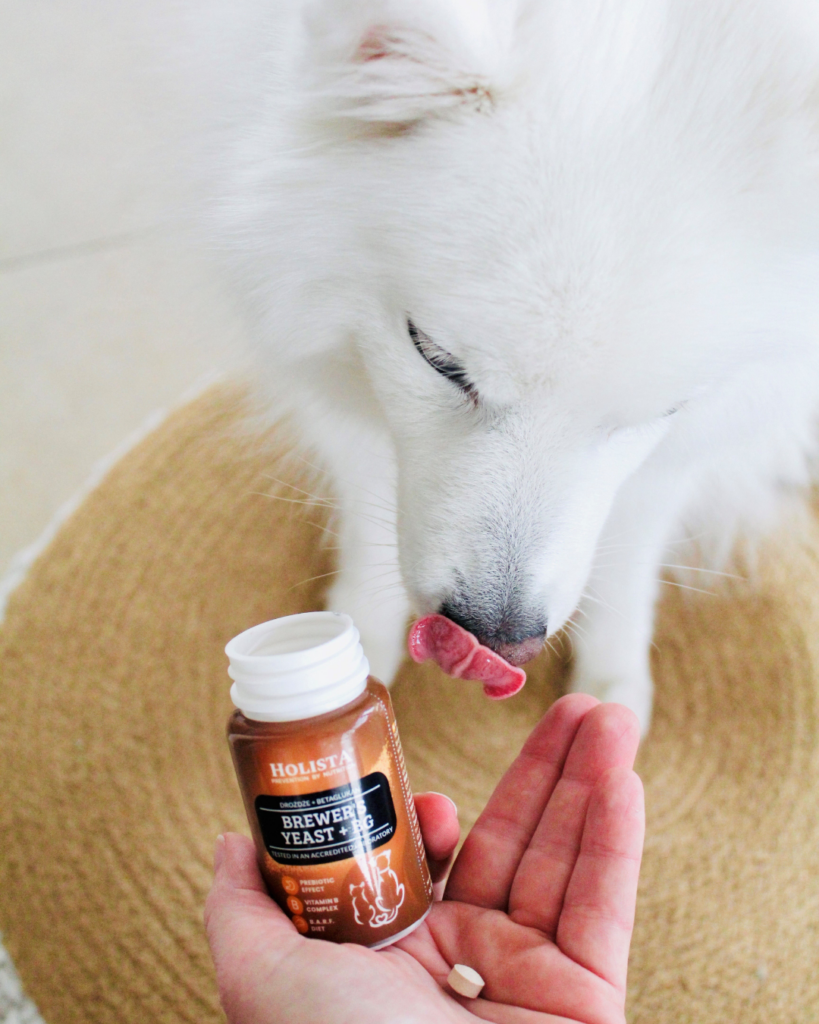
Method of administration: mix with wet food or water before serving.
Storage: at room temperature in original packaging, tightly closed.
Do not use in animals allergic to pork.
Note: Protect the product from moisture!