🎁 Free Holista Alga 250g with purchases of CHF 49 or more using the code ALGAFREE ! 🎁

If your dog has bad breath, yellow teeth or visible tartar, chewing alone is probably not enough. While chewing can help reduce plaque accumulation, most dogs need a combination of dental care measures to maintain healthy teeth and gums.
✓ Appropriate chewing activities
✓ Oral care products such as enzymatic toothpaste
✓ Nutritional support
✓ Regular veterinary dental check-ups
Contrary to popular belief, chewing sticks, bones, antlers or dental treats alone is rarely enough to keep a dog’s teeth healthy. For many dogs, particularly small breeds, seniors and those with dietary sensitivities or medical conditions, finding a chew that is safe, appealing and effective for supporting dental hygiene can be challenging.
The earlier preventive dental care becomes part of your dog’s routine, the easier it is to avoid tartar buildup, gum disease and costly veterinary procedures later in life.
If we had to choose the best products to build a complete home dental care routine, these would be our favourites:
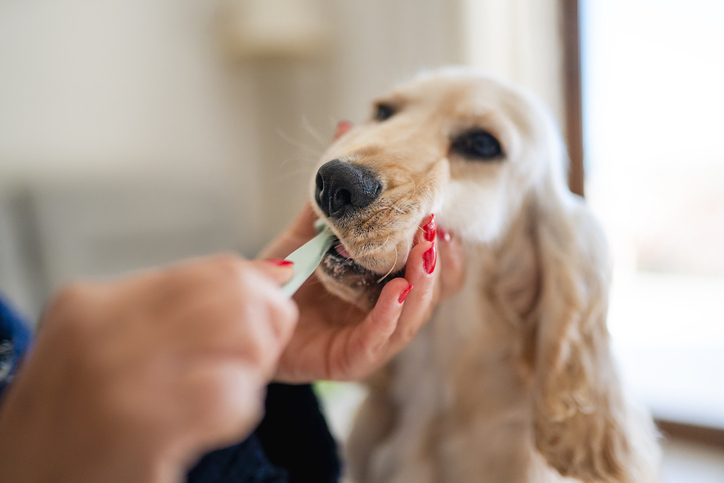
Helps remove plaque directly from the tooth surface and supports oral hygiene in areas that chewing cannot reach effectively. Unlike standard pet toothpastes, which rely mainly on brushing to clean the teeth, enzymatic formulas contain active enzymes that help break down food residues and reduce bacterial activity in the mouth. As a result, they continue working after application and can support oral hygiene even when brushing is less frequent than recommended. However, enzymes do not replace the mechanical action of a toothbrush. The most effective approach combines both: brushing to physically remove plaque and enzymatic ingredients to support a healthier oral environment between brushing sessions.
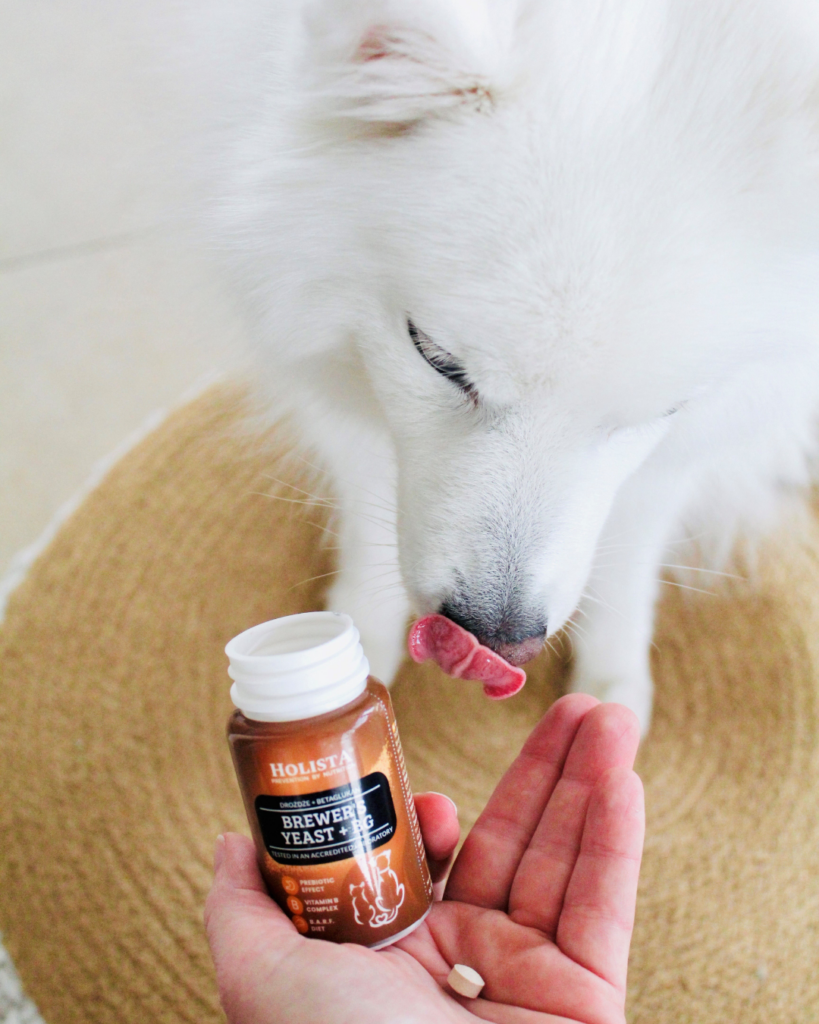
Provides daily support from within and may help reduce plaque accumulation, tartar formation and bad breath over time when used consistently. Holista Bio Alga contains Ascophyllum nodosum, a marine algae that has been investigated in several studies on canine oral health. After ingestion, naturally occurring bioactive compounds are absorbed through the digestive system and subsequently reach the oral cavity via saliva. Research suggests these compounds may help reduce bacterial adhesion to the tooth surface, influence the formation of dental biofilm and create a less favourable environment for plaque and tartar accumulation. Clinical studies have also reported improvements in oral health indicators such as plaque levels, calculus formation, gum health and volatile sulfur compounds associated with unpleasant breath. Unlike brushing or chewing, which act directly on the teeth, Holista Bio Alga supports oral health continuously as part of the dog’s daily diet.
Encourages natural chewing behaviour, provides mental enrichment and contributes to the mechanical cleaning of the teeth. Coffee wood has become increasingly popular among dog owners looking for a long-lasting and safe alternative to traditional chews. Unlike many edible chews, it contains no calories, animal proteins or artificial additives, making it a practical option for dogs with dietary restrictions, food sensitivities or weight-management needs. Owners also appreciate its durability, low odour and relatively clean use around the home compared with many natural animal-based chews or random sticks brought home from a walk that also tend to break into potentially dangerous splinters. By satisfying a dog’s instinctive need to chew, coffee wood can provide enrichment, help combat boredom and offer gentle mechanical support for dental hygiene at the same time.
Offer a different chewing texture that helps satisfy natural chewing instincts while supporting dental hygiene. Unlike coffee wood, which is valued for its hardness and longevity, coconut husk provides a more fibrous chewing experience that encourages dogs to engage their teeth and jaws in a different way. This variation can be particularly beneficial for dogs that quickly lose interest in a single type of chew. Owners often appreciate coconut husk chews because they are plant-based, naturally low in calories and suitable for many dogs with dietary restrictions. Together, coffee wood and coconut husk create a complementary combination, offering both durability and texture diversity while supporting enrichment and everyday oral care.
No single product can guarantee perfect teeth, but combining several scientifically supported approaches gives dogs the best chance of maintaining healthy teeth and gums between veterinary dental check-ups.
This is one of the most common questions veterinarians hear. Many owners assume that because their dog chews daily, dental disease should not develop. Unfortunately, dental plaque forms continuously on the surface of the teeth. Chewing may help clean certain areas, but it rarely reaches all tooth surfaces equally. Plaque that is not removed can mineralise and become tartar. Once tartar has formed, it cannot usually be removed at home.
According to veterinary dental experts, periodontal disease is one of the most common health problems in adult dogs.
Myth: Kibble cleans teeth
Fact: Most standard kibble is not designed to provide effective dental cleaning. While chewing dry food may offer some mechanical abrasion, many kibble pieces break apart quickly or can even leave sticky residues on the tooth surface. Unless specifically formulated and clinically tested for dental health, kibble alone is unlikely to prevent plaque and tartar buildup.
Myth: My dog chews sticks, so dental care is unnecessary
Fact: Chewing can support dental hygiene, but it is rarely enough on its own. Many dogs that regularly chew sticks, bones or dental treats still develop plaque, tartar and gum disease over time.
Myth: Bad breath is normal in dogs
Fact: Persistent bad breath is often one of the earliest signs of oral health problems. It may indicate plaque accumulation, gum inflammation or other dental or digestive issues that deserve attention.
Myth: Only older dogs develop dental problems
Fact: While dental disease is most often diagnosed in older dogs, the process usually starts much earlier. Plaque and tartar accumulate gradually over months and years, which is why poor oral hygiene in a young dog often becomes visible only later in life. Small breeds are particularly prone to developing dental problems from an early age.
Myth: Once tartar appears, it can be removed at home
Fact: Once plaque has mineralised into tartar, it generally cannot be brushed or chewed away. Prevention is far easier than treatment, which is why regular oral care is so important.
While all dogs can develop dental disease, some are particularly vulnerable.
Small Breeds
Dogs such as Chihuahuas, Yorkshire Terriers, Maltese, Pomeranians and Toy Poodles often have crowded teeth, making plaque accumulation easier.
Senior Dogs
Years of plaque accumulation increase the risk of gingivitis and periodontal disease.
Dogs Fed Mainly Processed Diets
Dogs eating exclusively processed foods may receive less natural chewing stimulation than dogs consuming fresh, appropriately balanced diets.
Dogs With Dietary Restrictions
Food allergies, digestive sensitivities, pancreatitis or obesity can make it difficult to use many traditional dental treats.
Nutrition can influence oral health, although no diet can completely replace dental hygiene.
Many veterinarians and canine nutrition professionals observe that dogs consuming properly balanced fresh-food diets often develop less tartar than dogs fed exclusively highly processed diets.
One possible explanation is that fresh diets typically involve more natural chewing and contain fewer sticky residues that can contribute to plaque accumulation.
However, it is important to understand that:
A healthy mouth is usually the result of several complementary habits rather than a single food choice.
As discussed in our recommended 4-step dental care routine, the most effective approach combines several complementary strategies rather than relying on a single product.
Plaque forms continuously on the surface of the teeth. The sooner it is disrupted, the less opportunity it has to harden into tartar.
Regular chewing activities can contribute to mechanical cleaning, particularly when dogs are offered appropriate chewing materials with different textures. This is one of the reasons why our recommended routine combines both Coffee Wood and Coconut Husk Chews, which encourage natural chewing behaviour while providing different chewing experiences and dental reach.
Dental care is not only about what happens on the tooth surface. The oral environment also plays an important role in plaque accumulation, tartar formation and breath quality.
Our recommended routine therefore combines Holista Bio Alga, which supports oral health from within as part of the daily diet, with Enzymatic Toothpaste, which helps reduce bacterial activity directly in the mouth.
A few minutes of dental care every day are generally more beneficial than intensive efforts performed only occasionally.
Products that can easily become part of a dog’s daily routine, such as Holista Bio Alga mixed into food, regular access to Lillabel Coffee Wood or Lillabel Coconut Husk Chews, and the use of Totobi Enzymatic Toothpaste, are often easier to maintain over the long term.
Once plaque has mineralised into tartar, it generally cannot be removed at home. This is why preventive care is so important.
By combining mechanical cleaning, support for the oral environment and regular monitoring of your dog’s dental health, many dental problems can be addressed before they become painful or require professional intervention.
Even the best home dental care routine cannot replace professional assessment. Regular veterinary examinations help identify dental issues early and allow owners to adapt their dog’s dental care routine when needed.
Ideally during puppyhood. However, it is never too late to introduce dental hygiene habits.
No. Chewing can support dental health, but it does not remove plaque as effectively as brushing.
Daily brushing is ideal, but any brushing is better than none. Even a few sessions per week can help support oral hygiene when combined with appropriate chews, supplements and regular veterinary care.
Start gradually and focus on positive associations. Allow your dog to taste the toothpaste first, then gently touch the lips and teeth before introducing a toothbrush. For dogs that are difficult to brush, complementary measures such as marine algae supplements and appropriate chewing opportunities can help support oral hygiene.
Yes. Small and toy breeds often develop plaque, tartar and periodontal disease more frequently than larger breeds due to crowded teeth and reduced spacing between them.
Visible tartar, persistent bad breath, red or bleeding gums, difficulty chewing or increased sensitivity around the mouth may all indicate that a veterinary dental examination is warranted.
Not necessarily. Every chew carries some level of risk depending on the dog’s size, chewing style and health status. The best choice is one that is appropriate for the individual dog and used under supervision.
Absolutely. Establishing good dental habits early in life is often easier than introducing them later. Regular oral care during puppyhood may help reduce dental problems in adulthood.
Not always. While dental disease is one of the most common causes, persistent bad breath can also be associated with digestive issues, dietary factors or underlying medical conditions. If the problem persists, consult your veterinarian.
Results vary between dogs, but studies investigating Ascophyllum nodosum typically evaluate oral health changes over several weeks of consistent daily use. As with most preventive measures, consistency is key.
Yes. In fact, these products work through different mechanisms and can complement one another as part of a broader dental care routine. This is why our recommended approach combines chewing opportunities, oral care and nutritional support rather than relying on a single solution.
A combination of an enzymatic toothpaste, Holista Bio Alga, coffee wood and coconut husk chews provides support through multiple complementary mechanisms and is one of the most comprehensive home dental care routines available without professional intervention.
Dental disease develops gradually, often without obvious symptoms during its early stages. By the time tartar becomes visible, inflammation may already be affecting the gums and the dog’s overall health.
The good news is that prevention does not require complicated routines. Small daily actions like appropriate chewing opportunities, nutritional support, enzymatic toothpaste and regular veterinary check-ups can make a significant difference to your dog’s comfort and long-term health.
Because healthy teeth are about much more than fresh breath. They are an important part of your dog’s overall wellbeing.
Niemiec, B. A. (2008). Periodontal disease. Topics in Companion Animal Medicine, 23(2), 72–80. https://doi.org/10.1053/j.tcam.2008.02.003
Gawor, J., Jank, M., Jodkowska, K., Klim, E., & Svensson, U. K. (2018). Effects of edible treats containing Ascophyllum nodosum on the oral health of dogs: A double-blind, randomized, placebo-controlled single-center study. Frontiers in Veterinary Science, 5, 168. https://doi.org/10.3389/fvets.2018.00168
Gawor, J. P., Reiter, A. M., Jank, M., Kurski, G., Wojtacki, M. P., & Kurek, A. (2021). Influence of dietary supplementation with a powder containing Ascophyllum nodosum on saliva metabolomic profile of dogs with plaque and calculus. Frontiers in Veterinary Science, 8, 681951. https://doi.org/10.3389/fvets.2021.681951
Logan, E. I., Finney, O., & Hefferren, J. J. (2002). Effects of a dental food on plaque accumulation and gingival health in dogs. Journal of Veterinary Dentistry, 19(1), 15–18. https://pubmed.ncbi.nlm.nih.gov/11985120/
Niemiec, B. A., Gawor, J., Nemec, A., Clarke, D., McLeod, K., Tutt, C., Gioso, M., Steagall, P. V., Chandler, M., Morgenegg, G., Jouppi, R., & Stewart, K. (2020). World Small Animal Veterinary Association Global Dental Guidelines. Journal of Small Animal Practice, 61(7), E36–E161. https://doi.org/10.1111/jsap.13132
Harvey, R., Laster, L., Shofer, F., Miller, B., & Others. (2019). 2019 AAHA Dental Care Guidelines for Dogs and Cats. Journal of the American Animal Hospital Association, 55(2), 49–69. https://www.aaha.org/public_documents/guidelines/aaha_dental_guidelines.pdf
If your dog has bad breath, yellow teeth or visible tartar, chewing alone is probably not enough. While chewing can